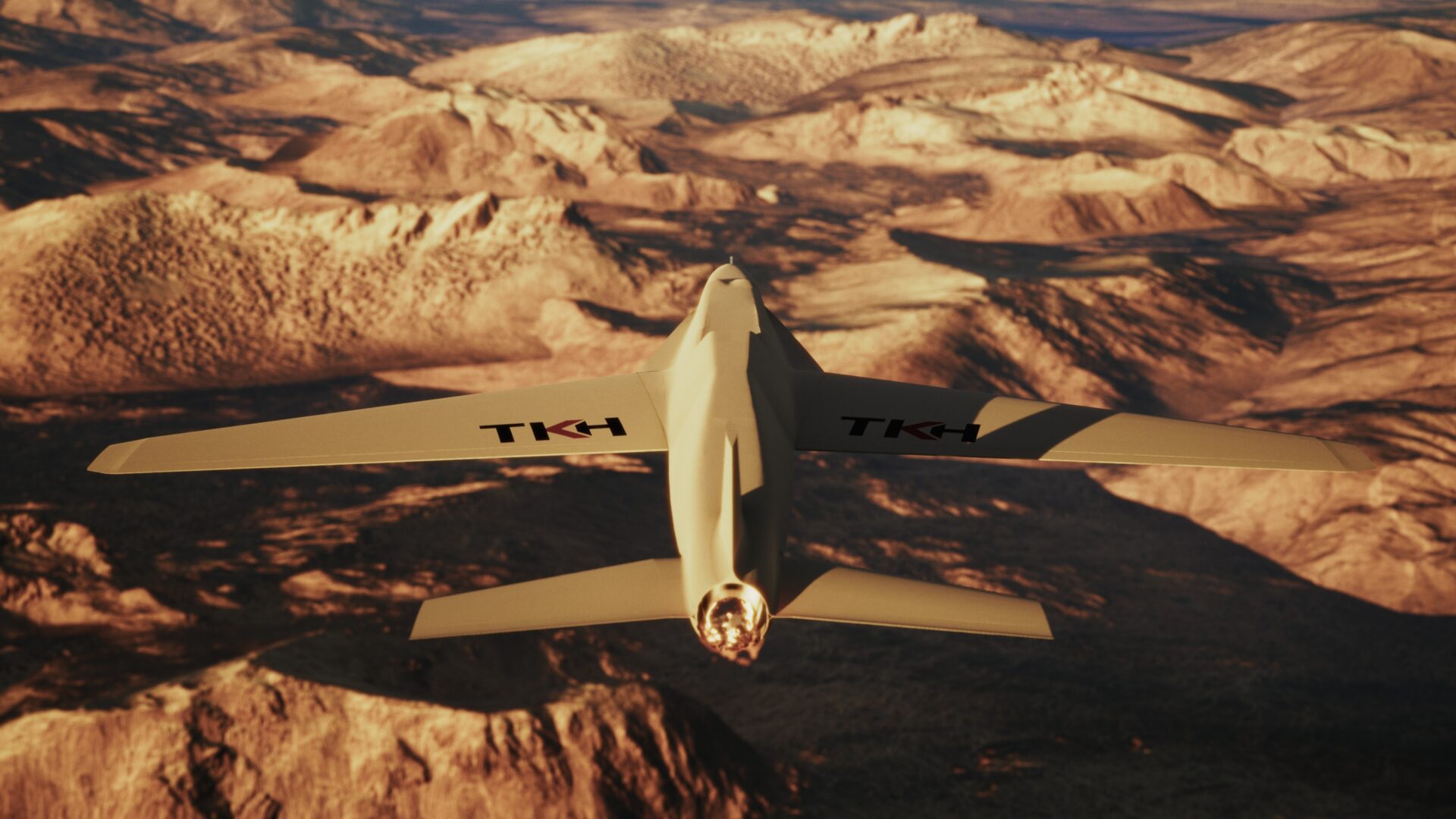
SYSTEMS ONLINE REV. 04 / 26
LAT 52°13'NLON 21°01'E ALT 00.000 m HDG 087°
FLIGHT READY V-DYN / VLS-04
Velaris unmanned aerial platform on high-speed approach over mountain terrain
VLS-MTJD / AUTONOMOUS AERIAL PROGRAM

High-Speed Aerial Systems & Turbojet Propulsion.

Engineered for Speed. Built for Scale.

Velaris develops autonomous unmanned aerial systems and proprietary ETJ-series turbojet propulsion — engineered for strike, reconnaissance, and target-acquisition missions. The modular MTJD platform family scales from the flight-qualified MTJD-15 up to the Mach 2.3 MTJD-100, backed by an in-house engine line and vertically integrated production.

Four disciplines.
One integrated
aerial capability.

Our approach fuses propulsion engineering, airframe design, and mission software into a single coupled system — so each platform is developed as a whole, not as the sum of off-the-shelf parts. From ETJ turbojet cores to flight-ready MTJD airframes, Velaris controls the full stack — in-house.

/ 01

Compact
Turbojet
Engines

ETJ-series cores from 600 N up to 4.1 kN class — available as standalone product or integrated stage.

/ 02

High-Speed
Aerial
Platforms

The MTJD family — from subsonic MTJD-15 today to Mach 2.3 MTJD-100 in concept.

/ 03

Integrated
Propulsion +
Airframe

Engines and airframes designed as a matched set — not adapted from commercial cores.

/ 04

Scalable
Production
Engineering

Built on our in-house technology park — vertically integrated, cost-optimized from day one.

Velaris delivers both standalone ETJ turbojet propulsion systems and a vertically integrated MTJD aerial platform family — bridging the gap between low-performance micro-turbines and high-cost traditional aerospace.

SECTOR 01 / SYSTEMSSYSTEMS

Modular
air vehicles.
Mission-adaptive by design.

The MTJD family is a coordinated three-platform system — MTJD-15 in advanced flight test today, MTJD-70 and MTJD-100 in concept development. Each airframe is built around a modular payload bay that swaps between combat and ISTAR configurations in the field, letting one fleet scale across strike, reconnaissance, and target-acquisition missions without redesign.

Velaris Dynamics MTJD next-generation aerial platform over cloud layer at dusk
MTJD-15 · Autonomous Turbojet UAV · Flight Test VLS/REC-0142 · 26.04
MTJD-15 · PLATFORM BRIEF CLS-A · REV 02
Rangeup to 1,000 km
Max Cruise Speed> 500 km/h
Cruising Altitude42,000 ft / 13 km
Takeoff Speed56 m/s
Payload15+ kg
MTOW85 kg
Length2.9 m
Wing Span2.4 m
LAUNCH: RUNWAY · RAIL · ROCKET-ASSISTED MODE: STRIKE · ISR · TARGET ACQUISITION
Platform Characteristics
  • /01High-speed flight capability across subsonic and transonic regimes
  • /02Extended range performance optimised for endurance-critical missions
  • /03Modular payload architecture, swappable in field conditions
  • /04Configurable missions — strike, reconnaissance, target acquisition, T&E
  • /05Production-oriented design with reduced part count
System-Level Design

Each platform is developed as a coupled propulsion-airframe-software system — with the engine matched to mission profile, aerodynamic geometry optimized for the target speed regime, and structural design aligned with manufacturing constraints from day one. MTJD-15 has reached TRL 7, with ongoing work on environmental hardening, producibility optimization, and continued flight testing.

Regime
Subsonic → Supersonic
Launch
Runway · Rail · Rocket-Assisted
Recovery
Conventional · Parachute
Autonomy
Waypoint · GNSS-Denied
Platform Family
MTJD-15 · TRL 7
15+ kg · 1,000 km · > 500 km/h · 13 km
MTJD-70 · Concept
70 kg · 800+ km · Mach ~0.8 · 13 km
MTJD-100 · Concept
100+ kg · 1,000+ km · Mach ~2.3 · 15 km

* Concept-phase performance values are early estimates and may shift during production qualification.

SECTOR 02 / PROPULSIONPROPULSION

Compact cores.
Aerospace-grade
thrust.

The ETJ series is a family of proprietary micro-turbojet engines developed around a deliberate cost ceiling — addressing the critical gap between underpowered commercial micro-turbines and prohibitively expensive traditional aerospace cores. Every unit ships both as an MTJD propulsion stage and as a standalone product for third-party integrators.

VLS-ETJ / TURBOJET UNIT
ETJ-61
Micro Turbojet · 600 N Class · Flight-Qualified
1.42T/W
Thrust-to-Weight
600N
Design Thrust
900°C
TET Operating
Key Capabilities
  • /01High thrust-to-weight performance across operating envelope
  • /02Compact architecture designed to integrate with modern airframes
  • /03Stable operation across full mission profiles
  • /04Deliverable as an MTJD propulsion stage or as a standalone powerplant
Engineering Approach
/01CFD ModelingAdvanced flow analysis across the full compressor-turbine stageANALYSIS
/02FEM · ThermalStructural & thermal analysis validated against hot-section testSTRUCTURAL
/03Combustion TuningAnnular combustion system optimised for fuel flexibilityCOMBUSTION
/04High-Speed RotatingRotor dynamics, bearing architecture and balancingDYNAMICS
Materials & Construction
Hot Section
Nickel Superalloys
Structure
Titanium · Aluminum · Stainless
Processes
5-Axis Machining · Forming · Casting
Additive
LPBF 3D Printing · Composites

The ETJ engine family is a core system driver — enabling high-speed flight, extending operational range, and reducing mission cost across the MTJD platform line. Current concept engines target 2.2 kN (MTJD-70) and 4.1 kN (MTJD-100) thrust classes.

SECTOR 03 / ENGINEERINGMANUFACTURING

A direct line
from design
to production.

Velaris develops every technology on a clear, deliberate path to manufacturing — inside our own facility. Geometries, fasteners, and fluid paths are justified against production logic, so what is proven at TRL 5 does not have to be re-engineered at TRL 8. The majority of each MTJD unit is built on our in-house technology park, reducing third-party dependency to a minimum.

PHASE 01 DSG
System
Architecture
Integrated propulsion, airframe and avionics defined as one coupled system from requirements capture.
↳ 02
PHASE 02 SIM
Aerodynamic &
Thermal Modeling
High-fidelity CFD + thermal coupling across the full envelope, correlated against flight-representative test.
↳ 03
PHASE 03 STR
Structural
Optimisation
FEM-driven structural refinement balanced against mass budget, stiffness and manufacturing constraints.
↳ 04
PHASE 04 INT
Integration
Engineering
Sub-system integration validated on-bench and in flight — propulsion to airframe, power, sensors, payload.
↳ MFG
Manufacturing Strategy
  • /01Simplified component architecture — fewer interfaces, fewer failure modes
  • /02Reduced part count across propulsion and airframe families
  • /03Scalable production processes targeting serial output
  • /04Proprietary design algorithms and in-house mission-management software
Industry Context
  • /01Modern aerospace demands rapid development cycles
  • /02Repeatable, qualified production — not artisanal one-offs
  • /03Scalable output aligned with operational tempo
  • /04Velaris is designed from day one to meet these requirements
×3FASTER TO SERIES

Velaris technologies are designed to meet production requirements from the outset — not bolted on once the prototype flies.

SECTOR 04 / APPLICATIONSAPPLICATIONS

Engineered for
operators
at the edge.

Velaris technologies support a mission-diverse aerial portfolio — strike, reconnaissance, and target acquisition as primary use cases, with extended reach into long-range ISR and advanced aerospace test programs. The same ETJ cores and MTJD airframes adapt across mission domains without re-engineering.

/01
Strike
Operations
Precision kinetic delivery via modular combat payloads on the MTJD line.
/02
Reconnaissance
& ISR
Extended-endurance observation and signals collection across denied airspace.
/03
Target
Acquisition
Real-time targeting data and designation for joint strike operations.
/04
Long-Range
ISTAR
Deep-theater unmanned missions — beyond 1,000 km of tactical range.
/05
Test &
Evaluation
Reconfigurable airframes for propulsion, sensor, and payload trials.
/06
Advanced
Aerospace Programs
Collaborative development for national and allied industries.

Market direction
driving demand.

The shift toward autonomous systems, distributed operations, and scalable aerial capabilities is redefining what propulsion and platform technology must deliver — at speed, at range, and at production tempo.
  • Autonomous Systems
  • Distributed Operations
  • Scalable Aerial Capability
  • Sovereign Propulsion
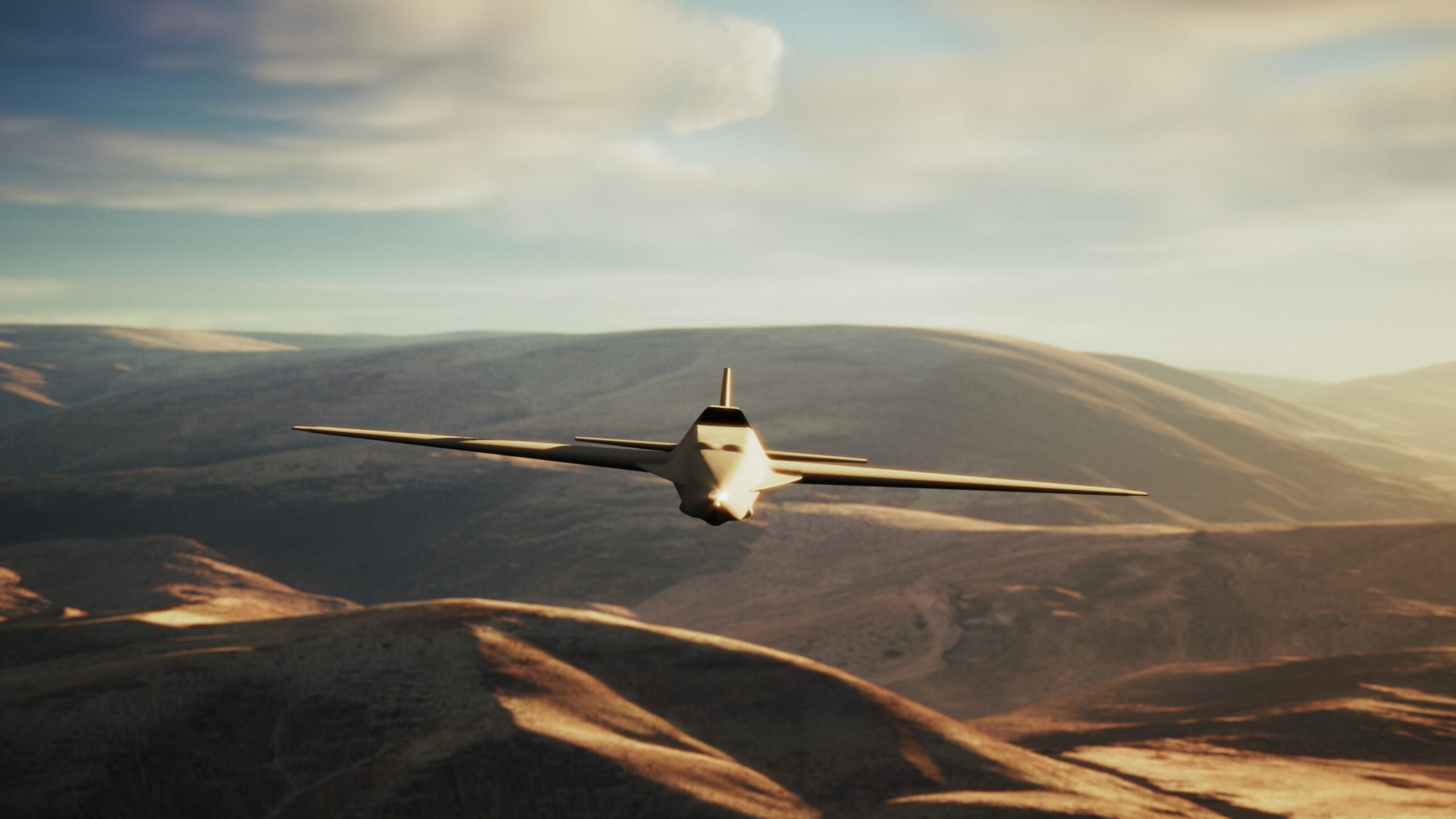
Unmanned aerial platform cruising over canyon terrain

A vertically
integrated
aerial stack.

Velaris owns the propulsion science, the airframe physics, the design algorithms, and the production lines that turn them into flight-qualified hardware. From ETJ combustor to MTJD control surface — every critical IP stays in-house. That combination is rare, and it is the difference between a demonstrator and a fielded system.

Request Capabilities Brief
01
Proprietary Propulsion
Compact turbojets engineered in-house — not rebadged commercial cores.
02
Matched Airframes
Platforms designed around the engine, not the other way around.
03
Production DNA
In-house technology park — from 5-axis machining to LPBF 3D printing.
04
Sovereign Capability
End-to-end IP ownership — from combustor to mission-management software.

Engineered
for speed.
Ready to talk.

For MTJD platform enquiries, ETJ propulsion licensing, joint programs, or partnership briefings — reach the Velaris team directly. We respond within one operational day.

HQ San Antonio

Open Briefing Channel

SECURE · END-TO-END
Protected by reCAPTCHA · Privacy · Terms